


Why Most Artists Refuse Cover-Up Work, and What You Need to Know Before You Book
If you’ve ever asked a PMU artist to correct or cover up a bad tattoo, you may have been told “no”, or worse, completely ignored. The truth is, corrective work is one of the most advanced services in the world of permanent makeup. Very few artists offer it, and for good reason: it requires technical mastery, strategic design, and clinical restraint. Furthermore, not every tattoo is fixable with more tattooing.
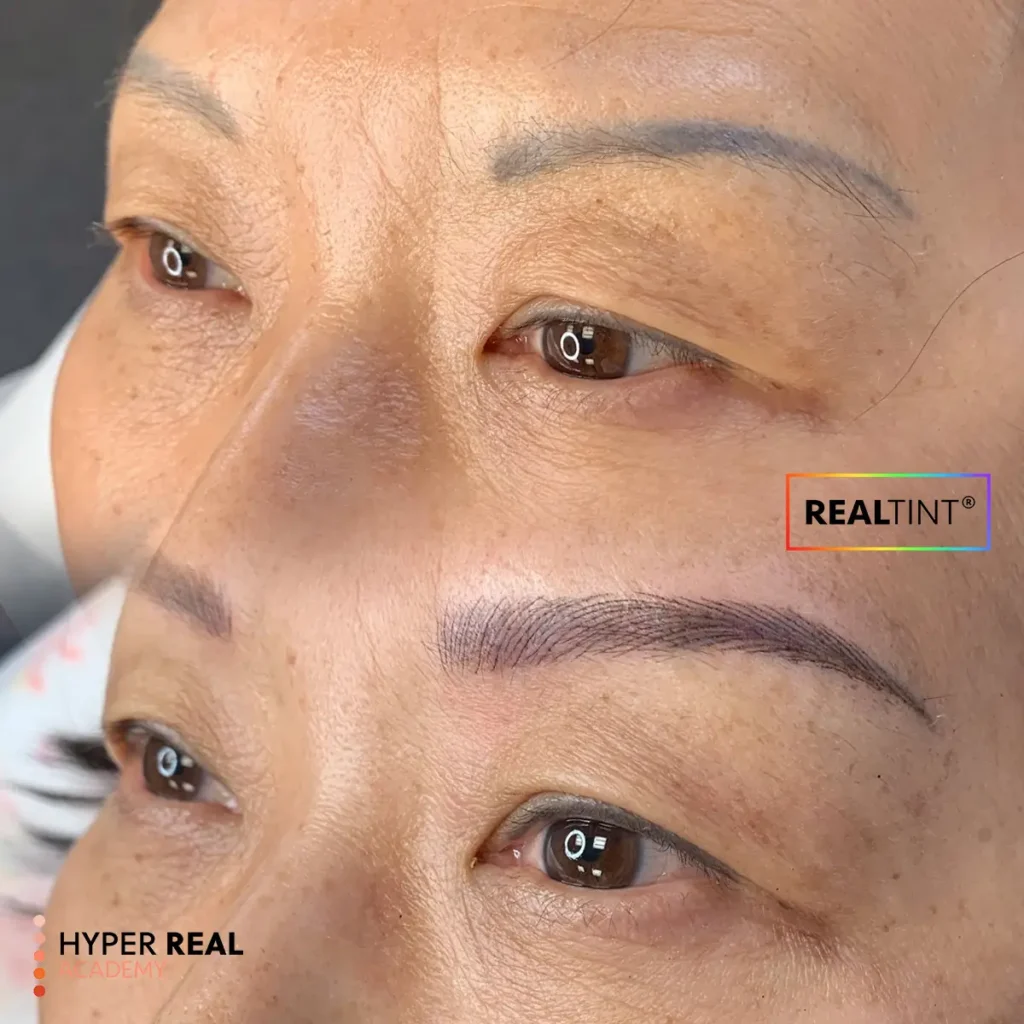
Hyper Real Academy has been performing complicated corrective work since 2020. As an instructor and professional artist, it is disheartening to hear so many of my clients tell me about how often they were waved off, misinformed, or even ignored entirely when searching for someone to fix their tattoo. To honor the clients and trainees who’ve placed their trust in me over the years, I wrote an all-encompassing guide about corrective cosmetic tattooing.
Let’s break down the essentials of PMU correction so you can be an informed client, or an educated artist ready to take on this challenging but massively rewarding work. I will discuss the benefits and limitations of corrective tattooing, compare the pro’s and con’s of cover-up’s and tattoo removal, and the key techniques that are necessary for a successful correction. I will also show you what to look for when searching for a professional to do your cover-up work, as well as the red flags to look out for along the way.
What Is PMU Correction?
PMU correction (or revision) refers to the process of performing a cosmetic tattoo procedure to enhance the appearance of a previously tattooed area that has faded poorly, discolored, was done incorrectly, or no longer suits the client’s features. A correction differs from a routine touch-up because it requires revising the previous tattoo, not simply refreshing it. Corrections are also typically performed by a different artist than the one who did the original unsatisfactory work. PMU correction can involve:
Color Correction: Camouflaging blue, gray, red, orange, purple, or other unwanted tones
Shape Adjustment: Adjusting the shape of the tattoo to enhance balance or symmetry.
Cover Up: Covering undesired areas with pigment.
Removal: Partially or completely removing an undesired tattoo using saline or laser.
How Does Correction Work?
The process begins with a consultation to assess the tattoo the client wishes to correct. From there, the artist will develop a customized plan for the correction, which may require multiple sessions to complete. Once the artist and client have agreed on the correction plan, the procedure can move forward.
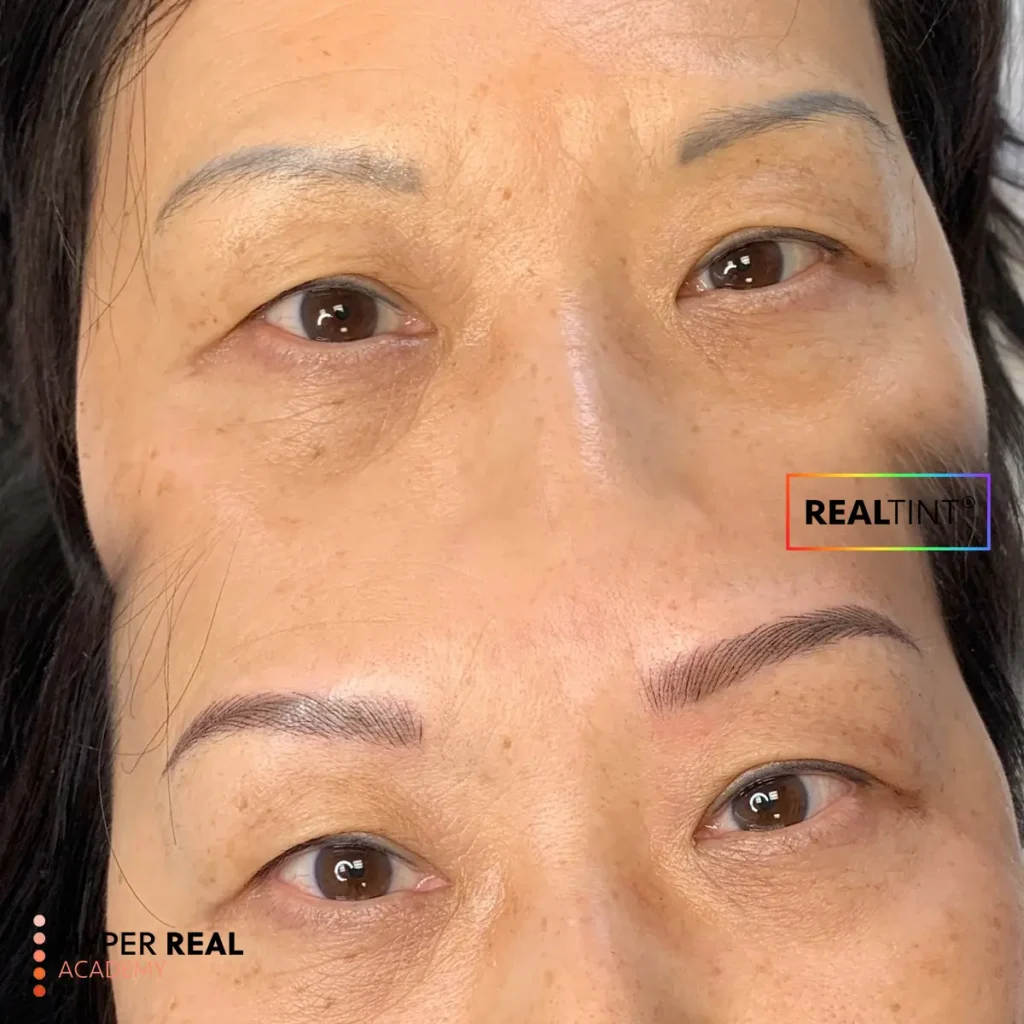
Examples of PMU correction:
- Eyebrow tattoos with gray or bluish undertones may need to be neutralized with warm corrector pigments before adding any new hairstrokes.
- Lip Blush done too dark may require careful layering of warm pigments to brighten dull tones, or lightened using saline removal.
- Uneven Permanent Eyeliner cannot be safely adjusted without understanding lash line anatomy and working with extreme precision. Uneven lines can be adjusted by adding more pigment to create a thicker, but more even line.
- Tattoos with blowouts and ink migration will require a removal to eliminate the areas where the pigment does not belong.
Correction or Removal…or a Little of Both?
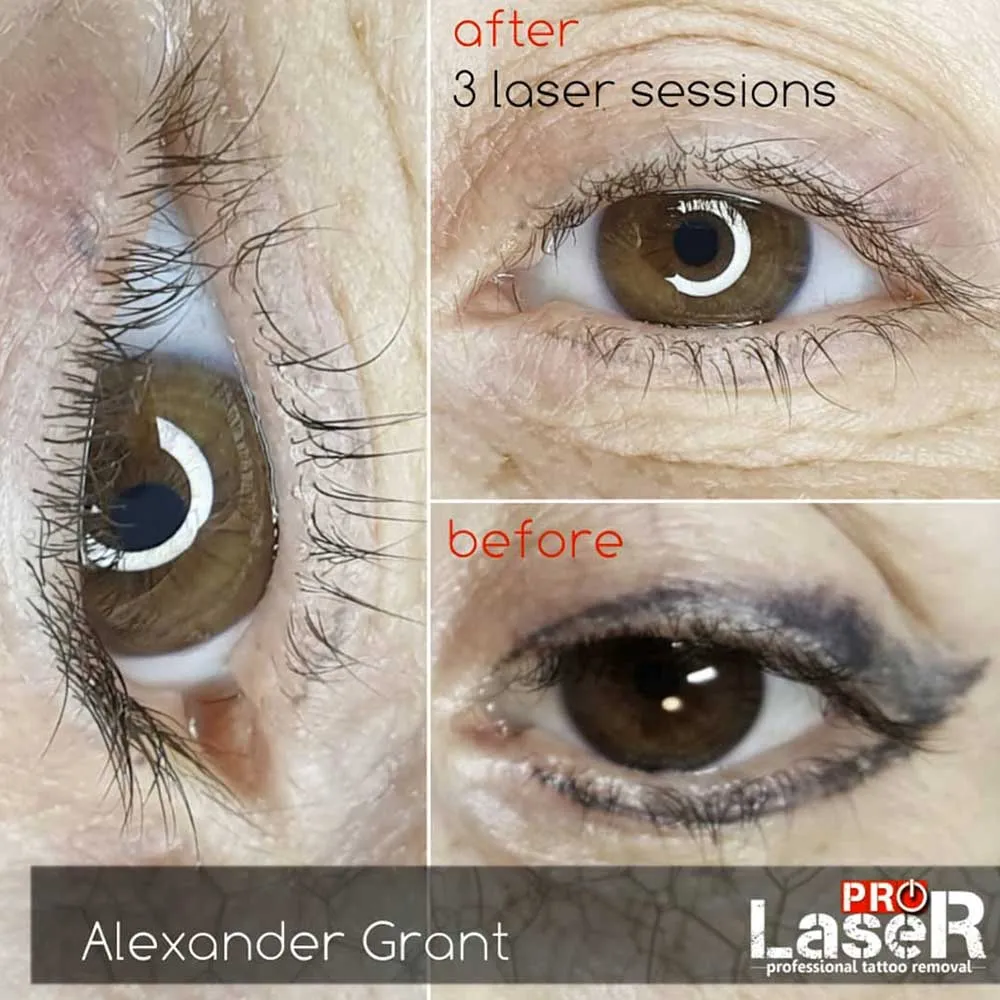
When a PMU procedure goes wrong, many clients turn to professional tattoo removal. Saline or laser removal may be used to lighten, partially remove, or fully remove a tattoo. While multiple sessions are needed for full pigment removal, just one or a few sessions are often enough to lighten the overall tattoo or remove a specific area. In many cases, partial removal is all that’s required to make a successful tattoo correction possible.
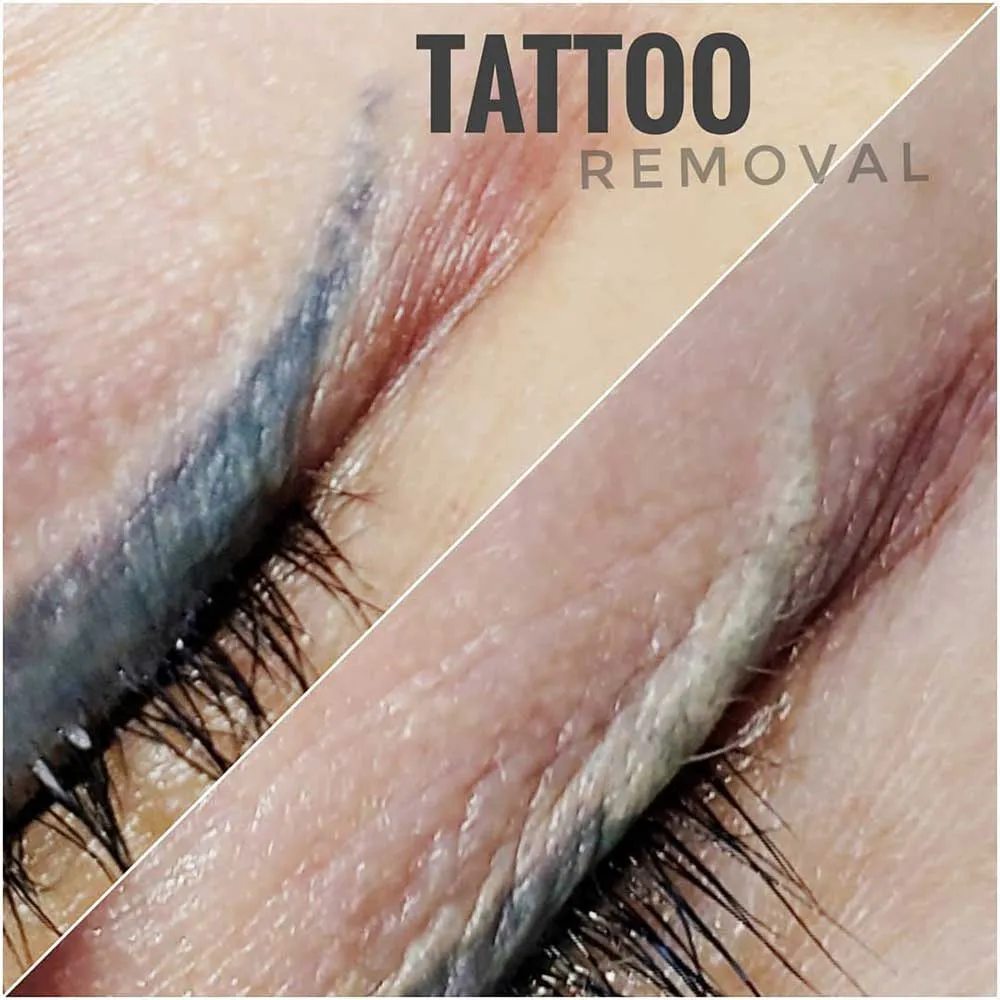
If the tattoo is too dark, fully saturated, or was placed too deeply, true correction is impossible without first removing the existing pigment. All tattoos are inherently sheer; they merge with the client’s natural skin tone and any existing pigment beneath the surface. It is not possible to fully cover a dark tattoo with a lighter pigment.
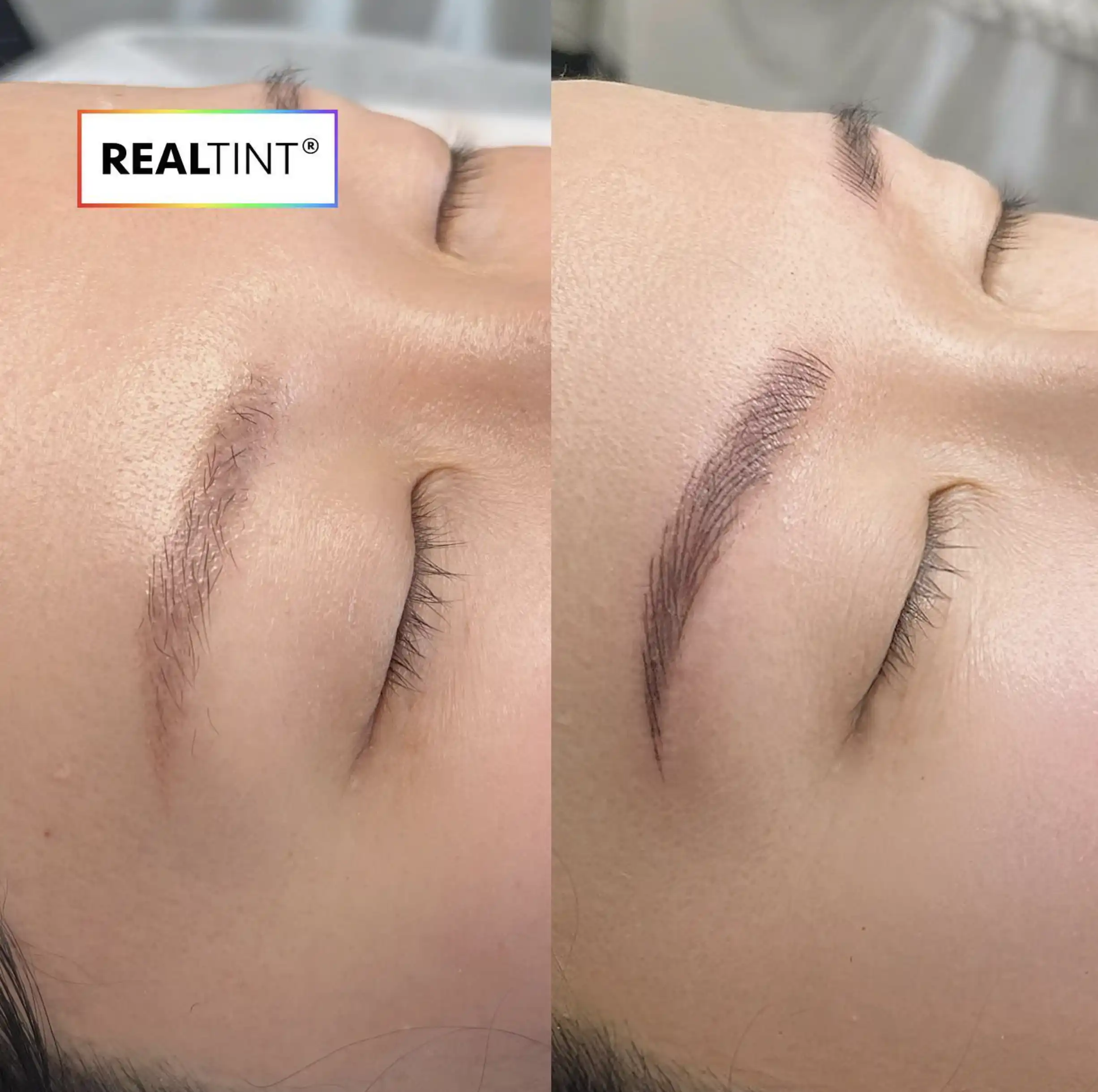
At Hyper Real Academy, we teach that botched PMU, blowouts, and migrated pigment, must never be covered up without first lightening the area using a tattoo removal. Covering a dark tattoo with more pigment will not fix anything, and can even result in a mess that is worse than the original tattoo. However, clients gain far more options for correction if they choose to partially or fully remove the unwanted tattoo beforehand.
Correction vs Removal Results
Correction
Removal
Can improve color and shape.
Can fully or partially remove pigment.
Requires pigment layering, potentially color neutralization.
Uses saline or laser to lift pigment.
Better for minor/moderate revisions.
Essential for botched or deeply saturated work.
Results are limited by the shape and saturation of the original work.
Multiple sessions are often required.
May not fully hide old work.
May leave skin texture changes if scarring is present.
Artists who know how to combine both techniques strategically can offer clients the best possible long-term results.
Who Can Do PMU Corrections?
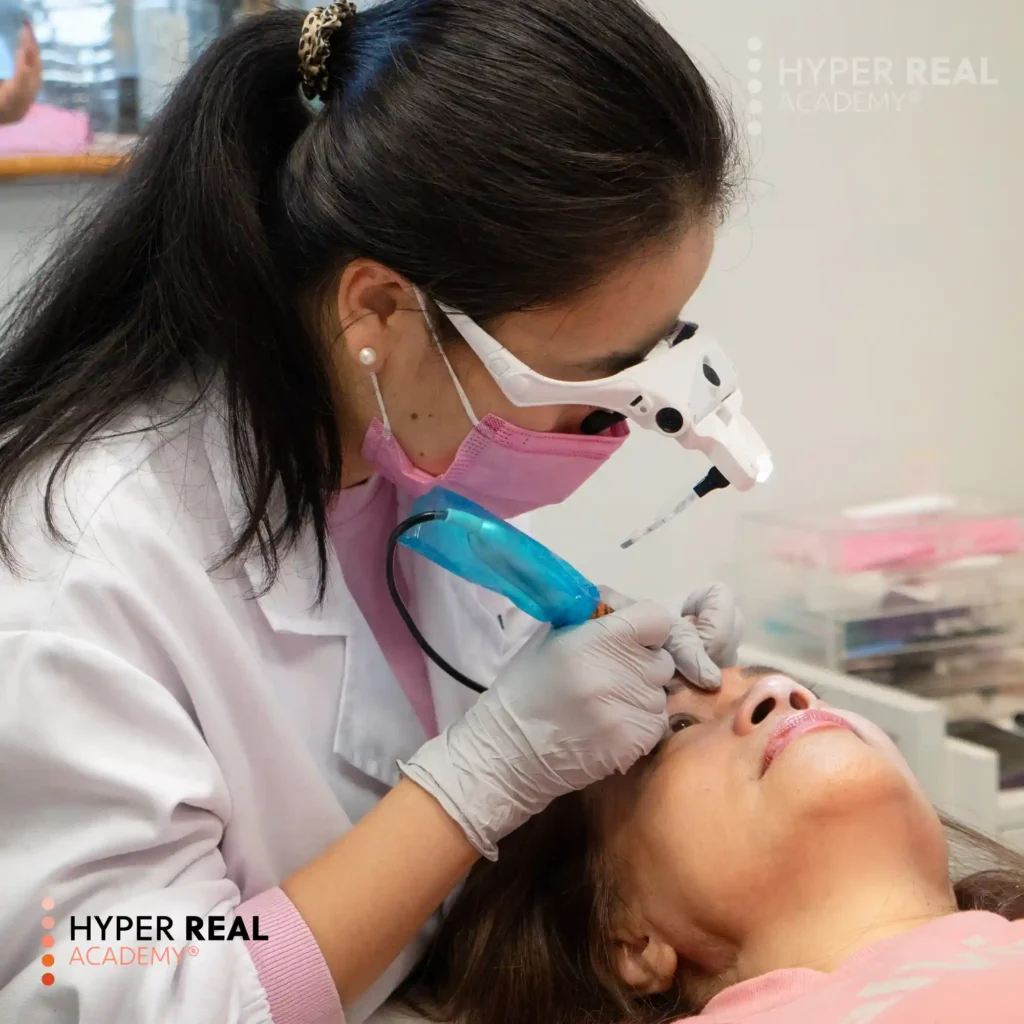
Not every PMU artist should be correcting work. In fact, most don’t, and that’s a responsible choice. Only licensed artists with a deep understanding of color theory, machine proficiency, and certified training should attempt corrective services.
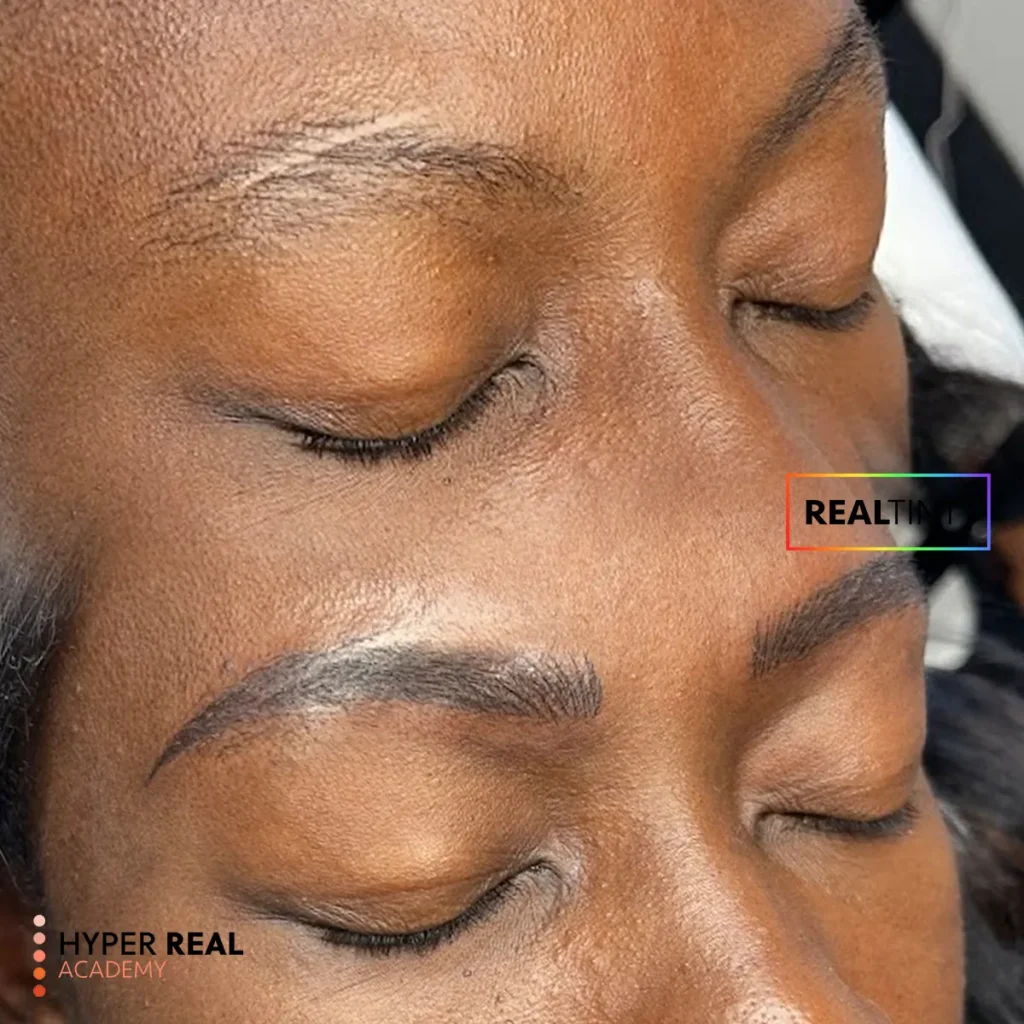
Corrections are often evaluated before an artist agrees to complete the procedure. If an artist refuses to correct someone else’s work, they are protecting both your skin and their reputation. It’s not about ego—it’s about safety.
What Skills Are Needed for Corrections?
An artist performing corrections must have:
- Advanced color theory knowledge
- Experience with pigment layering
- Mastery of needle configurations
- Finesse with pressure and depth control
- Understanding of skin undertones and healing behavior
- Removal training and licensing (when applicable)
Color theory is often utilized to camouflage undesired tones and lift dull colors by using specialized color mixers. This knowledge is important for all artists who perform corrective work. Color corrections require the artist to blend new pigment colors with both the existing tattoo and the color of the client’s skin to achieve the desired corrective tattoo color. The artist must also understand how to predict the healed result.

Machine proficiency is essential for every type of corrective PMU procedure. Many cover-up’s require full saturation machine techniques so that the new tattoo can successfully cover the older pigment. A large number of clients who came to my clinic for corrections had visible scarring from poorly executed tattoos done at other studios, with especially severe cases caused by microblading. Scarred skin is far more challenging to work on and demands a higher level of technical expertise.
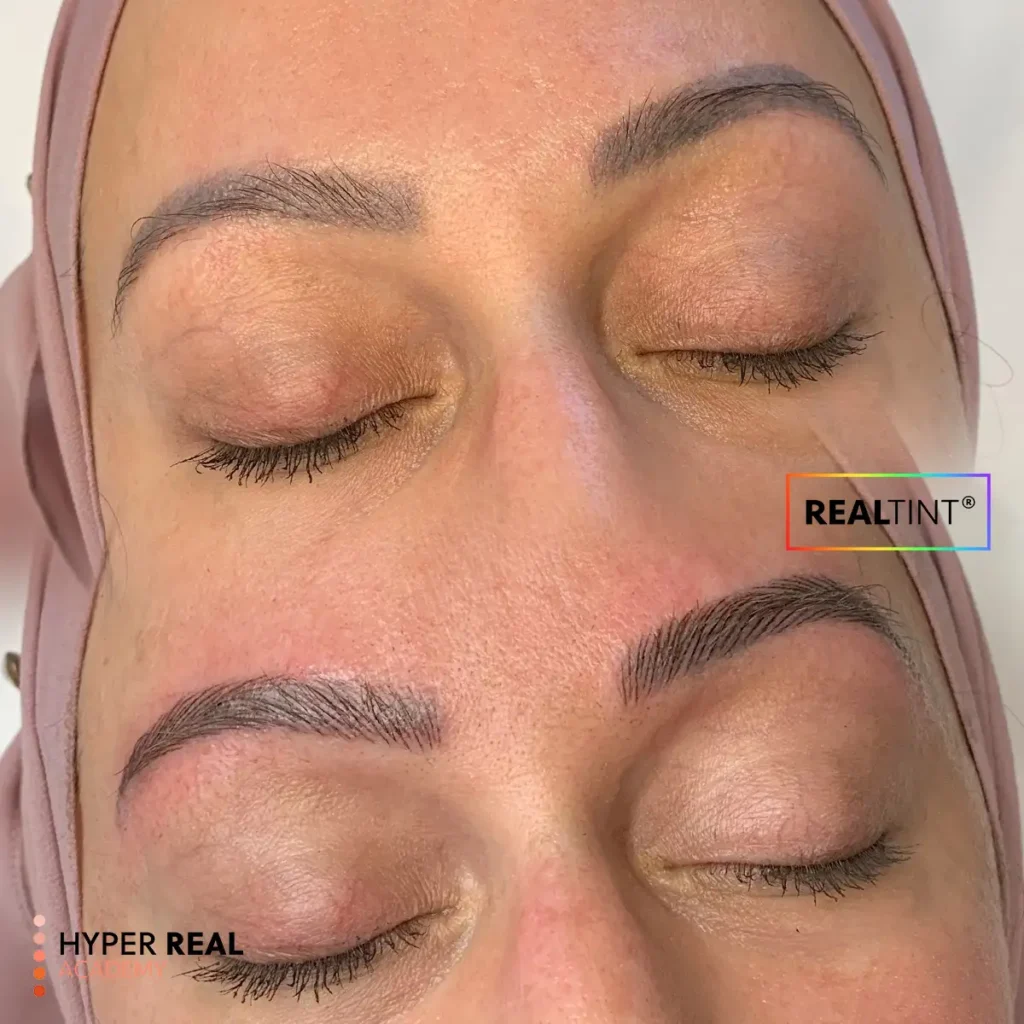
Correcting an old tattoo will often involve working with patchy and uneven areas. Artists must convert these uneven areas into a smooth layer or color or gradient. Areas that are too light must be adjusted without allowing the darker areas to become too dark. Targeted placement is very important to ensure that the new tattoo will not exacerbate the unflattering effects of the old tattoo.
Results and Longevity of Corrected Work
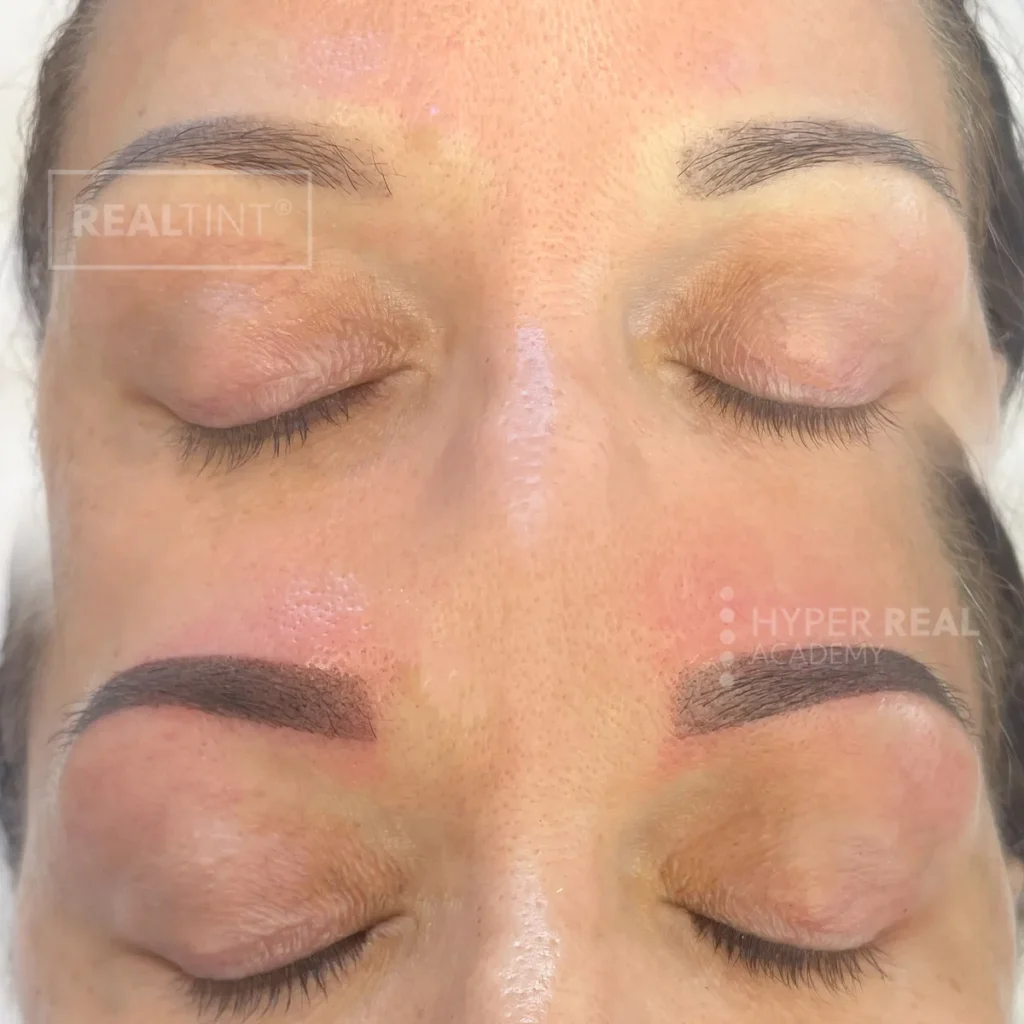
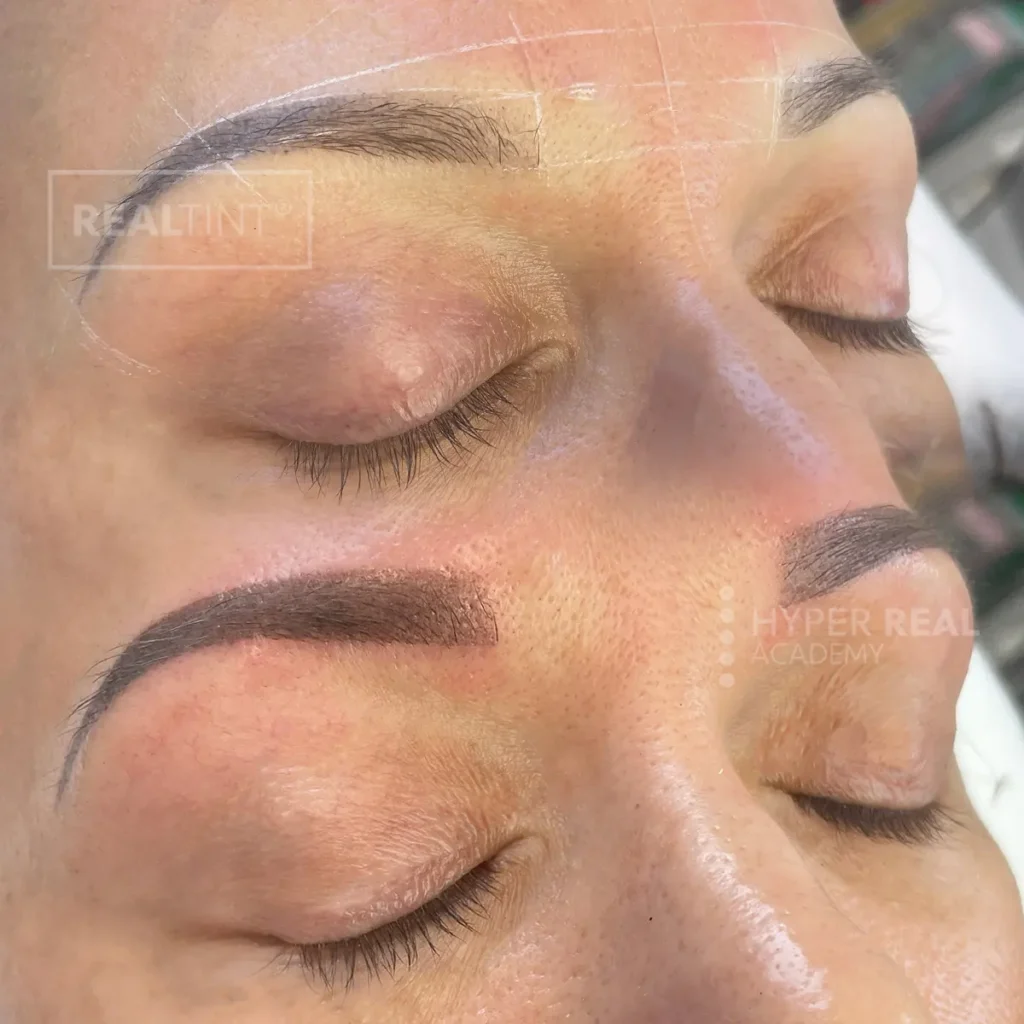
PMU corrections don’t always last as long as brand new tattoos. Because corrected areas often require sheer pigment layers and conservative techniques, the pigment may fade faster. The skin behaves like a sponge; once oversaturated with pigment, it can no longer absorb additional color, making it impossible to camouflage what lies beneath.
One of the core principles of PMU is to achieve realistic results. An ethical artist will advise clients to undergo tattoo removal before attempting a correction if the existing pigment is too saturated. Attempting to tattoo over fully saturated skin will typically lead to results that fade within weeks.
Clients can expect corrected PMU to last up to 18 months before a touch up is recommended, depending on the condition of the original tattoo and the technique used to fix it.
Red Flags to Watch Out For
Avoid any PMU artist who:
- Says they can “just cover it up” without looking at your tattoo.
- Refuses to explain how correction differs from a regular PMU session.
- Doesn’t perform a color match or undertone test.
- Suggests using skin-toned pigment to cover dark tattooed areas (this is not color correction—it’s a cover-up, and it often heals gray or muddy).
- Doesn’t have healed results of corrections in their portfolio.
How to Review an Artist’s Portfolio for Corrective Work
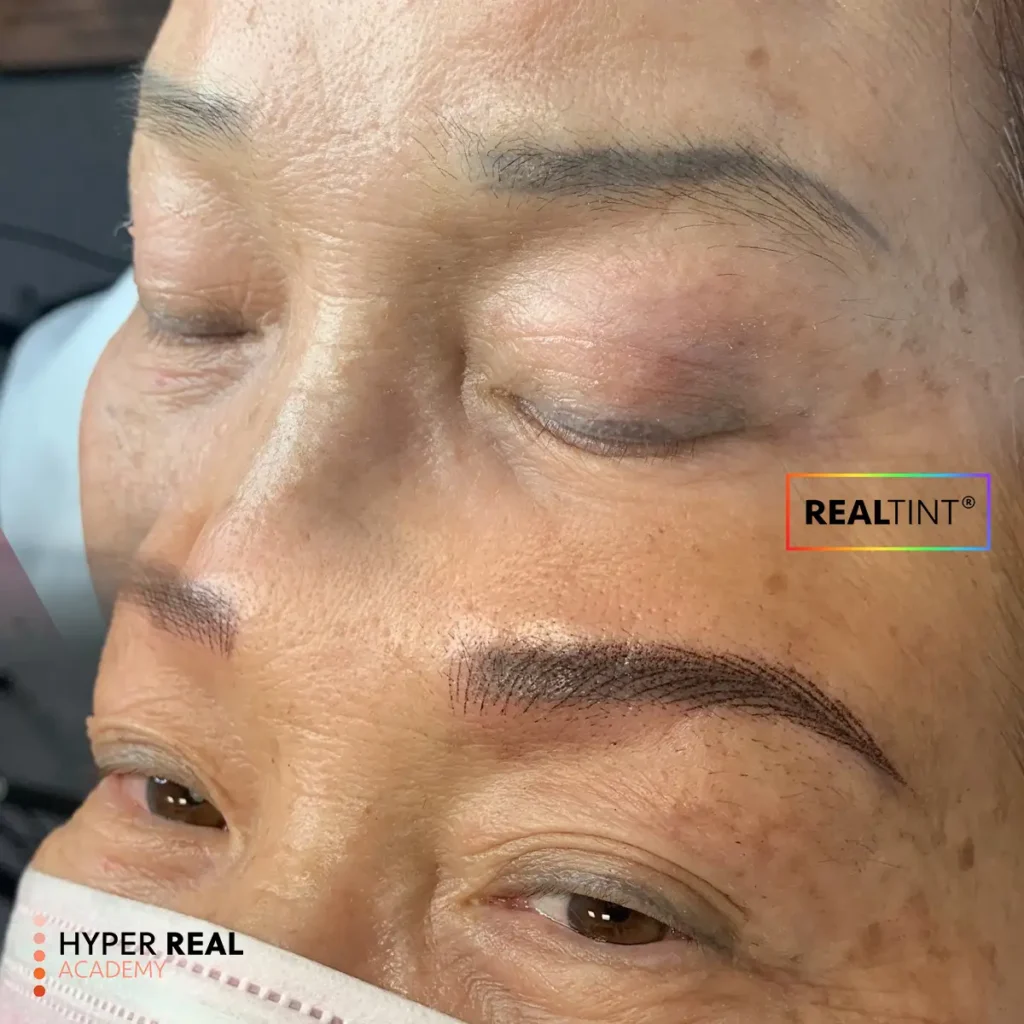
Look for these signs of a strong correctional PMU artist:
- Unedited Before and after photos that show the true condition of the original tattoo
- Videos of the process and results of corrective work
- Healed results, not just fresh work
- Diversity in corrected cases (different undertones, saturation levels, scar types)
- Detailed captions explaining the technique or correction plan
- Consultations (ideally free) are done before any payment is taken
- Strong corrective results (i.e. adjustments to correct asymmetry, successful color correction, successful cover-up results)
- Open communication from the artist when clients/viewers ask questions
Questions You Need to Ask
Here are some questions you should ask during your consultation with your PMU artist:
- Have you corrected PMU work like mine before?
- Will I need removal before the correction?
- What pigments do you use for color correction, and why?
- What parts of my tattoo do you intend to correct, and how will you make these corrections?
- Can you show me photos of healed corrective work?
- Do you have any training or certification in removal?
- Are you board-certified (the certification boards for PMU are the American Academy of Micropigmentation and the Society of Permanent Cosmetic Professionals)?
- How many sessions will I need?
- How long will my corrective results last?
Don’t be afraid to ask. Every artist should expect to earn their client’s trust. A well trained artist will welcome your questions and address all of your concerns.
PMU correction is an elite service that blends aesthetics, technical precision, and ethics. It requires a level of precision and knowledge that most artists have not yet acquired. If you’ve received a poorly done tattoo, don’t give up hope. Schedule a consultation with a licensed professional to create a plan to perform a corrective procedure, or a tattoo removal.
As we often say at Hyper Real Academy: “Do it right, or don’t do it at all.”
If you’re looking for corrective work, start with an artist who specializes in it, and understands that less is often more.


