


Hair is one of the most defining characteristics of a person’s overall appearance.
Countless people are already self-conscious about their receding hairlines before the invention of social media.
In 2024, every insecurity is inflated to the extreme, thanks to the “swipe culture” of dating apps and the “comparison culture” that stem from our drive to achieve an #instaperfect life.

By expert estimation, approximately 50% of men will experience a degree of male pattern baldness by the age of 50. The risk of hair loss will increase in age for men, with 25% of men experiencing signs of hair loss by 30.
In similar studies, 40% of women are estimated to experience hair loss by the age of 50. Female pattern hair loss presents in a different manner compared to male pattern hair loss, however the effects are still prominent and a cause of pain for many women. The risk of hair loss for women will increase with age, most notably following menopause.

Hair loss is not always a sign of poor health or illness, as many factors that contribute to hair loss are genetic. This means that a vast amount of our population’s aesthetic image is negatively affected by something that they cannot control. Experts from around the world are working tirelessly to provide a much needed solution for hair loss and hairline recession.
Hyper Real Academy’s contribution to modern hair restoration is the RealTint® PULSE machine, the newest technology for safe and beautiful scalp micropigmentation (SMP).
In this article, we will show you the facts about hair loss in all genders and explore the many methods of hair restoration.
Am I Losing Hair?
Based on the statistics shown in the aforementioned studies regarding hair loss in men and women, a man has a 1 in 2 chance of experiencing hair loss by the age of 50, and a woman has a 4 in 10 chance of the same experience by 50.
For many men, the first signs of male pattern baldness may appear as early as in their late teens to early 20’s. The degree of hair loss will vary greatly from one person to another, however the majority of men will experience hair loss in a similar pattern. The Norwood-Hamilton Scale is a widely accepted chart used to measure male pattern baldness.
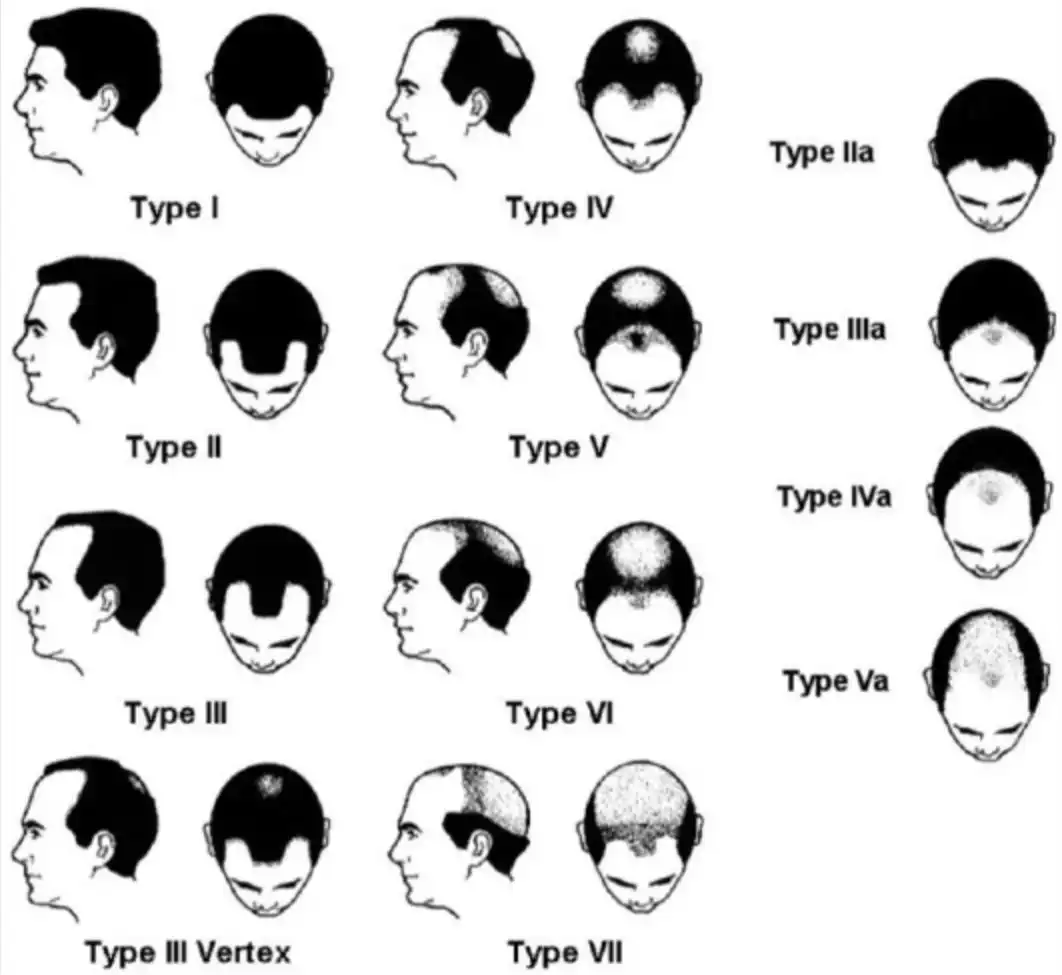
Women tend to lose hair later in life than men, with the first signs of noticeable thinning for many women occurring at around the age of 40 or even as late as 50. The female pattern of hair loss is also different from that of male hair loss. The Ludwig Scale is typically used to determine the progression of hair loss in women.

Using these charts will help in determining your hair loss pattern, as well as make predictions of future hair recession. Hair loss may occur gradually, following predictions based on the Norwood-Hamilton and Ludwig charts respectively, but other types of hair loss may occur suddenly as a response to stress, environmental factors, diet, among other afflictions and health issues.
Why Am I Losing Hair?
The most common reason for permanent hair loss in all genders is genetics. This condition is sadly incurable with a cause that cannot be controlled by the afflicted individual.
Genetic
Androgenetic Alopecia is commonly referred to as permanent hair loss resulting from genetics. The effect is observed as a gradual reduction of hair and hair volume following puberty. 85% of men will experience hair loss in their lifetimes. This type of hair loss occurs as the body’s excessive response to androgen.
Overstimulation of hair follicles by androgens result in reduction of follicle size, shortened growth cycles per strand of hair, as well as thinner strands of hair per follicle. Eventually, terminal hairs will convert to vellus hairs (peach fuzz).
Male pattern baldness is affected by the hormone DHT. Increased levels of androgens, including DHT, will result in the aforementioned miniaturization of hair follicles.
Female pattern baldness is also typically genetic and is seen to present following hormonal changes such as menopause, pregnancy, and childbirth.
Health conditions affecting hormones, such as PCOS, are also directly linked to female pattern hair loss. Between 20-30% of women affected by PCOS also experience hair loss.
Non-Genetic
Non-genetic factors can contribute to hair loss, especially acute or rapid onset hair loss. Stress is observed by experts to contribute to hair loss in both genders.
Nutrition is also an observed factor in hair loss. Women with anemia or low iron levels may experience thinning hair and hair loss.
Environmental factors that negatively affect the skin and scalp may affect hair growth or contribute to hair loss. Medications and medical treatments may cause hair loss as an unintended side effect. The stress of wearing tight ponytails or glue-in hair pieces may also cause hair loss.
Determining the cause of hair loss is the recommended first step to take before exploring the abundance of options for treatment. Hair loss is a symptom of various chronic illnesses that should be addressed to full extent before any elective aesthetic treatments are applied.
What Are My Options to Reduce Hair Loss?
There are many possible solutions that target hair loss. Here are some common treatments, listed in order from minimally invasive to surgical.

Non-Invasive Preventative
Minoxidil (Rogaine) - This is an FDA-approved topical treatment that is used to promote hair growth and inhibit hair loss. This treatment is estimated to cost $10-$50 per month. Common side effects include irritation, itching, and dryness. Uncommon side effects include dizziness and chest pain.
Finasteride (Propecia) - This is an oral prescription medication that inhibits the hormone DHT. This medication is used to target male pattern baldness and is FDA-approved only for use in men. The cost of this treatment is estimated at $60-$100 per month. Side effects include sexual dysfunction, erectile dysfunction, and mood changes.
Low-Level Laser Therapy (LLLT) - This treatment is an FDA-approved laser treatment used to promote hair growth. LLLT is designed to target thinning hair in both genders and is not designed for use in advanced stages of hair loss. A light is used to produce a wavelength that stimulates the stem cells responsible for the regeneration of hair follicles. The cost of LLLT devices are estimated at between $200-$9000, though not all devices are FDA-cleared or FDA-approved. Side effects include scalp irritation, headaches, and temporary increased shedding of hair.
Non-Invasive Camouflage
Scalp Micropigmentation (SMP) - SMP is a tattooing technique used to create small dots on the scalp that resemble full hair follicles. The use of SMP creates an illusion of fullness in the hairline, regardless of the amount of hair that is present. SMP can be done on bald clients and clients with anywhere from sparse to full hair volume. The cost of this treatment is estimated at $600-$1200 per session. The number of sessions required will vary based on the size of the treatment area and severity of hair loss. Touch up treatments are recommended after 3-4 years. Side effects include redness, irritation of the skin, and a chance of injury with improper technique or improper aftercare.
Minimally Invasive
Platelet-Rich Plasma (PRP) Therapy - This procedure is an injection of the patient’s own platelet-rich plasma. The platelets are harvested from the patient's blood and injected into their scalp. The cost of this treatment is $500-$1,500 per session. Following 4-6 sessions of PRP therapy, patients are expected to experience new hair growth for 18-24 months. Follow up appointments are recommended annually.
Surgical
Hair Transplant Surgery - This surgical procedure involves the tedious process of harvesting strong and full hair follicles from an area with high hair density, then implanting the harvested follicle into an area with low or no hair density. Hair transplant surgery is estimated to cost between $4,000-$15,000. The size of the treatment area will affect the cost, procedure time, and recovery time of the surgery. Side effects include surgical complications, common scarring, abnormal scarring (hypertrophic, keloid), and chance of infection or injury with improper aftercare. Follow up procedures may be necessary if further hair loss occurs.
Why is SMP the Best Camouflage to Hide Hair loss?
Hiding hair loss can be as simple as putting on a hat. Unfortunately, this solution is both temporary and limited, since there is bound to be a situation when a person will need to take their hat off. All head and hair coverings will cover hair loss, but not all covering methods are the same. SMP is a much more permanent method of camouflage for hair loss, and it is the only method of semi-permanent to permanent covering that is not damaging to the scalp.
Temporary solutions to hide hair loss are hats, scarves, wigs, and colored cosmetic products. While some of these solutions can be very convincing, such as a hair powder with fibers, these topical products come off easily with a splash of water or a gust of wind. The biggest downside to makeup is that the product is not attached to the scalp, making it prone to transferring onto clothing or washing off with sweat.
While glued-on wigs may appear to be a better solution for people that need a more permanent fix, there is also a big disadvantage to this method. The wig must be adhered to the scalp with glue, and the weight of the hairpiece may cause traction alopecia, the loss of hair due to stress on the scalp.
RealTint® SMP is currently the safest and most reliable way to experience hair restoration tattooing. The RealTint® PULSE machine is custom designed for only SMP. The built-in skin guards are the first of its kind, allowing precision application of pigment while prioritizing skin safety.

With RealTint® SMP, your licensed artist will minimize all risks associated with camouflage treatments and experience many benefits of permanent hair restoration. Because each RealTint® artist is required to earn board certification from the American Academy of Micropigmentation (AAM), you would be pleased to know that you are in good hands.
Should I Get Hair Transplant Surgery or SMP?
Hair transplant surgery is the most extreme, but most effective method in restoring the hairline after experiencing hair loss. What a lot of people don’t know is that hair transplant surgery can be greatly enhanced by SMP. The SMP hairline tattoo will camouflage areas of low hair volume, and most importantly it will also conceal the telltale scarring caused by the hair transplant surgery.

Scarring is completely normal and expected for the majority of hair transplant patients. Hair follicles will not grow in the same place as scar tissue. Some people are unhappy with the scarring following their surgery because there may be a very obvious line of missing hair in the back of the head, where the transplanted hair is typically harvested.
While some people experience more severe scarring than others because of their skin type, SMP assures that all hair transplant patients will see the best results possible while hiding all degrees of scarring. SMP is used routinely to conceal all types of scarring on the client’s scalp, whether it is from small injuries or a result of surgery.
SMP can be done on any skin type and is recommended to be used in conjunction with other forms of hairline restoration methods for the best results possible. Not all hair loss treatments provide dramatic results. SMP is often utilized to bridge the gap between good and great results.

To learn more, visit our FAQ’s to see questions from our real prospective clients.
Talk to us before you decide on your hairline restoration solution.
Call us today!


